Electrify Your Projects with Our Expertise


Electrify Your Projects with Our Expertise

To determine your home’s electrical capacity, locate the main service panel and check the amperage rating on the main circuit breaker (commonly 100A, 150A, or 200A). To calculate the actual load, sum the wattage of all lighting and appliances, applying demand factors—typically 100% for the first 3,000 VA and 35%-40% for the remainder—then divide by 240 volts.
Your home’s electrical capacity is determined by the amperage rating of your main service panel, most commonly 60, 100, 150, or 200 amps, and how much of that capacity your household is actively consuming at any given time. If your breakers trip regularly, your lights dim when the AC kicks on, or you find yourself relying on power strips just to run everyday appliances, your system may be at or near its limit.
Knowing where you stand is the first step toward knowing whether your home is safe, sufficient, and ready for modern electrical demands. At TurnKey Electricals, we help New Orleans homeowners identify electrical capacity issues before they become safety hazards.
Contact us today for a free estimate.
 Home electrical capacity is the total amount of power your electrical system can safely deliver at one time, measured in amperes. It is set by your main service panel, which receives power from the utility’s service entrance and distributes it through individual branch circuits to every outlet, fixture, and appliance in the home.
When your household’s electrical demand regularly approaches or exceeds that rated capacity, the system comes under stress. Overloaded branch circuits cause breakers to trip, wiring to overheat, and in serious cases, electrical fires to ignite. For New Orleans homeowners, where aging housing stock and high electrical demand often intersect, knowing your capacity answers a direct question: can your system handle what you are already asking of it, and does it have room for what comes next?
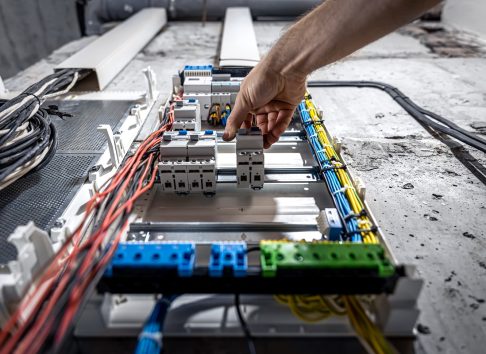
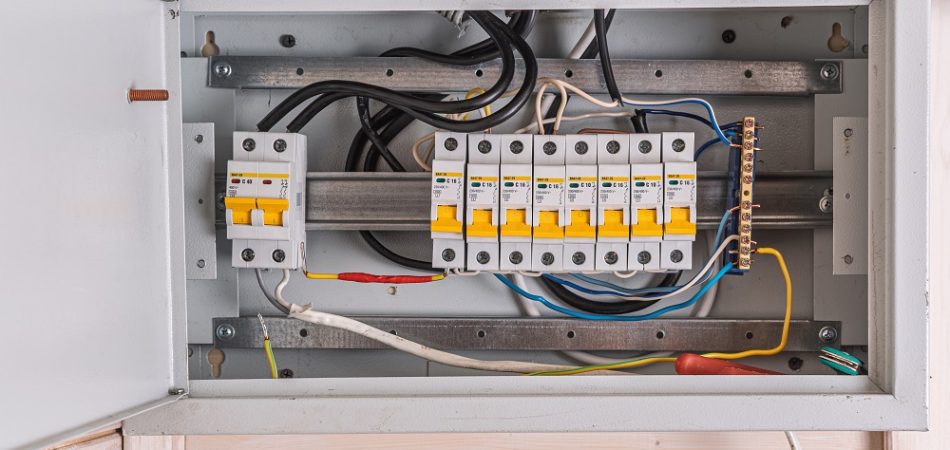
The most direct way to determine your home’s electrical capacity is to locate the main breaker inside your service panel. This is the large double-pole breaker at the top of the panel, separate from the individual circuit breakers below it. The amperage rating is stamped directly on the breaker handle, typically 60, 100, 150, or 200 amps, and represents the maximum ampacity your panel is rated to carry.
Here is what each rating generally means for a residential home:
If your panel does not have a visible rating or you are unsure how to locate it safely, do not attempt to open or probe the panel yourself. A licensed electrician can assess the service size quickly and without risk.
Your panel rating tells you your system’s ceiling. Your electrical load tells you how close you are to it. Load is the total wattage drawn by every device, appliance, and fixture operating in the home at the same time.
To estimate your peak load, you add the wattage of everything that runs simultaneously during high-demand periods, typically mornings and evenings when cooking, HVAC, and personal devices are all active at once. In a New Orleans home running central AC through a long, humid summer, those peak periods put real pressure on older panels. That figure, converted to amps, shows where your system sits relative to its rated capacity.
 The National Electrical Code, under Section 210.20(A), requires that overcurrent devices protecting branch circuits be rated to handle continuous loads at no more than 80% of their rated ampacity during sustained operation. This demand factor is a built-in safety buffer that protects wiring and breakers from heat buildup over time. If your household’s total calculated load consistently exceeds 80% of your panel’s capacity, your system is under strain.
For most homeowners, performing a full load calculation manually is not practical. A licensed electrician follows NEC Article 220 load calculation methods to account for every circuit in the home and produce an accurate demand figure, giving you a clear, code-based answer rather than a rough estimate.
Even without a formal load calculation, your home often gives clear signals when its electrical system is struggling to keep up.
A breaker that trips occasionally is doing its job. One that trips repeatedly under normal household use is telling you that the circuit is consistently running at or over its rated ampacity. When multiple breakers trip often, the problem may be at the panel level rather than any individual circuit.
When a motor-driven appliance such as an air conditioner, refrigerator, or washing machine starts up, it draws an inrush current that momentarily spikes the load. In New Orleans, where AC units run heavily for months at a time, this startup demand is one of the most common triggers for dimming lights. If your lights dim noticeably when this happens, your panel does not have enough available capacity to absorb that spike without affecting other circuits.
Extension cords are a temporary fix, not a solution. When a home does not have enough outlets or branch circuits to meet its needs, residents compensate with power strips and extension cords. This pattern is both a symptom of insufficient capacity and a fire risk when those devices are overloaded.
Outlets or switch plates that feel warm to the touch, or that show scorch marks or discoloration, indicate that the wiring behind them is carrying more current than it should. This is a code violation and an immediate safety concern that warrants professional attention.
Many homes in New Orleans and surrounding parishes were built decades ago and still carry original panels and wiring. Federal Pacific Electric Stab-Lok and Zinsco panels, installed widely between the 1950s and 1980s, have well-documented breaker failure and fire risk issues. Aluminum branch circuit wiring from the same era also carries elevated risk due to its tendency to loosen at connections over time. Either condition makes a professional inspection a priority.
Several variables determine whether your current service size is adequate or whether an upgrade is the right call.
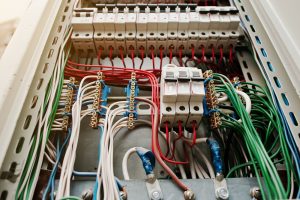 High-demand appliances: Central air conditioning, electric water heaters, electric dryers, and electric ranges each draw considerable amperage on dedicated circuits. In New Orleans, where central AC runs almost year-round, this is often the single largest continuous load on a residential panel. Running several of these on a 100-amp panel leaves very little headroom for the rest of the home’s electrical load.
Your home’s electrical capacity is not just a technical detail. It is a safety baseline. An undersized or overloaded service panel puts your New Orleans home and family at real risk, and that risk grows as households add appliances, devices, and technology over time.
If you have seen any of the warning signs covered here, or if your home is running on older service equipment, do not wait for a problem to confirm what the signs are already telling you. Call us at TurnKey Electricals today for a free estimate and let our licensed New Orleans electricians give you a clear picture of where your home stands.
Open your electrical panel and find the large main breaker at the top. The amperage rating is stamped on the breaker, typically 60, 100, 150, or 200 amps. That number is your panel’s rated capacity. A licensed electrician can also perform a load calculation to show you how much of that capacity your household is currently consuming.
Most modern homes in New Orleans need at least a 200-amp service panel to safely support central HVAC, multiple large appliances, and modern electronics. Many older New Orleans homes still running on 60- or 100-amp service are strong candidates for an upgrade, particularly as household electrical demand continues to grow.
Warning signs include breakers that trip repeatedly under normal use, lights that dim when large appliances start, outlets or panels that feel warm, burning smells near your electrical panel, or a panel that still uses fuses instead of circuit breakers. A licensed electrician can perform a formal load calculation to confirm whether your current service is adequate.
It depends on your panel size and how much capacity is already in use. A Level 2 EV charger requires a dedicated 240-volt circuit rated for 30 to 50 amps. Many older homes do not have the available ampacity to support this without a service upgrade. A load calculation will give you a definitive answer.
A 100-amp panel may be sufficient for a smaller home with modest electrical demands. However, many older New Orleans homes on 100-amp service are already running close to capacity with current appliances and devices. A licensed electrician can evaluate whether your panel size is safe and code-compliant for your specific situation.
NEC Section 210.20(A) requires that overcurrent devices protecting branch circuits be rated to handle continuous loads at no more than 80% of their rated ampacity during sustained operation. This buffer prevents sustained overheating in wiring and breakers. If your home’s total electrical load regularly approaches or exceeds 80% of your panel’s capacity, an upgrade is worth evaluating.
Most residential panel upgrades are completed in a single day by a licensed electrician. The work involves disconnecting the old panel, installing and connecting the new service panel, reattaching branch circuits, and completing a safety inspection before restoring power. Your electrician will confirm the exact timeline based on your home’s configuration.

 TurnKey Electricals