Electrify Your Projects with Our Expertise


Electrify Your Projects with Our Expertise

Motion sensor lighting offers enhanced security, energy efficiency, and convenience by automatically illuminating areas only when needed, reducing electricity costs and deterring intruders. However, they can suffer from false triggers caused by wind or animals, limited detection ranges, and potential maintenance issues due to frequent switching.
Motion sensor lighting has become one of the most popular upgrades for homeowners across New Orleans. Lights activate when someone enters a space and shut off automatically when the area is empty. It sounds simple, and it largely is.
But like any electrical upgrade, motion sensor lighting has real advantages and a few limitations worth understanding before you commit. TurnKey Electricals is a licensed and insured electrician serving New Orleans and surrounding areas.
If you’re ready to explore motion sensor lighting, contact us today for a free estimate.
Motion sensor lighting delivers four core benefits: energy savings, improved security, hands-free convenience, and longer bulb life. All four flow from one simple fact: the light only runs when motion is detected, so it is never burning energy in an empty room.
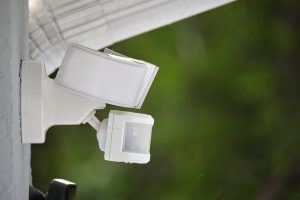 Because motion sensor lights only activate when needed, they use far less electricity than lights left running for extended periods. Research compiled by the U.S. Department of Energy shows that occupancy-based lighting controls can reduce lighting energy use by 30% to 50% in transitional and intermittently occupied spaces such as corridors, storage areas, and warehouses.
In continuously occupied rooms with steady traffic, savings tend to be lower, but the reduction is meaningful in any setting where lights are regularly left on in empty spaces.
Motion sensor lights remove the cover of darkness that intruders rely on. When a light suddenly activates along a back entrance or dark yard, it draws attention and signals that the property is being monitored. Paired with outdoor cameras, motion-activated lighting forms the first visible layer of home security.
A light that activates the moment you walk into a garage, hallway, or laundry room with both hands full is genuinely useful. For elderly family members or anyone managing mobility challenges, automatic lighting in stairwells and entryways also reduces the risk of trips and falls.
Because motion sensor lights accumulate far fewer operating hours than always-on fixtures, bulbs last significantly longer. Standard LED bulbs have a rated lifespan of 25,000 to 50,000 hours. Paired with a motion sensor that limits daily run time, those hours stretch even further, meaning fewer replacements and lower long-term maintenance costs.
Motion sensor lighting has three notable drawbacks: false triggers, coverage limitations, and poor fit for rooms where people sit still. Understanding each one before installation helps you place motion detector lights where they perform well and avoid the locations where they will frustrate more than they help.
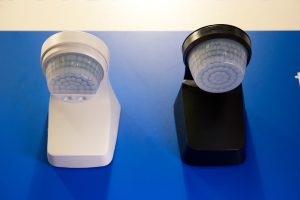 PIR (Passive Infrared) sensors, the most common type in residential fixtures, detect heat changes within their field of view. Pets, passing vehicles, blowing branches, and nearby HVAC vents can all activate the sensor when no person is present. Proper sensitivity adjustment and correct positioning during lighting installation reduces this significantly, but it requires getting the setup right from the start.
PIR sensors detect movement across their field of view most reliably, not movement coming straight toward them. Most residential models have a detection range of 30 to 70 feet, and obstructions like walls, large plants, or parked vehicles create blind spots. Sensor placement and angle are the biggest variables that determine whether your coverage works as intended.
In rooms where people sit still for long periods, such as a home office or living room, occupancy sensors can become a frustration. If you stop moving while reading or working, the sensor may read the room as empty and cut the light. Motion sensors are better suited to transitional spaces than to rooms built for quiet, stationary activity.
Motion sensor lights deliver the most value in transitional spaces: outdoor entryways, driveways, garages, hallways, stairwells, closets, and laundry rooms. These are areas where people pass through briefly, where automatic operation saves the most energy, and where false shutoffs are least disruptive.
For outdoor use, weatherproof hardwired outdoor motion sensor lighting with adjustable detection zones is the most reliable choice for New Orleans properties, where humidity and year-round storm conditions demand durable fixtures built for the climate. Indoor transitional spaces, including closets, stairwells, and garages, are equally strong candidates.
Commercial settings like warehouses, storage rooms, and office corridors also benefit significantly. The U.S. Department of Energy’s Better Buildings program identifies occupancy-based lighting controls
The right motion sensor light setup comes down to three decisions: sensor type, placement height and angle, and whether to go hardwired or wireless. Getting these right from the start, before mounting a single fixture, prevents false triggers, dead zones, and the most common complaints homeowners have after installation.
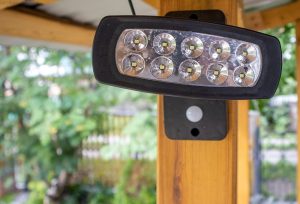 Sensor Type: PIR sensors are energy-efficient and reliable for most outdoor and transitional indoor spaces. Dual-technology sensors combining PIR with ultrasonic detection are more accurate in rooms where people remain still.
Motion sensor lighting is one of the most practical and cost-effective upgrades a New Orleans homeowner can make. The energy savings are real, the security benefit is immediate, and the convenience pays off every single day.
TurnKey Electricals offers expert lighting installation and electrical repair with transparent pricing and no surprises.
Call us today for a free estimate and let our team handle the setup from start to finish.
Yes. Research compiled by the U.S. Department of Energy shows that occupancy-based lighting controls reduce lighting energy use by 30% to 50% in transitional and intermittently occupied spaces. In continuously occupied rooms, savings are lower but still measurable, particularly wherever lights are frequently left on in empty spaces.
The most common triggers are pets, wind-blown foliage, passing vehicles, and heat sources near the sensor such as HVAC vents. Adjusting the sensor’s sensitivity and repositioning it away from those sources resolves most false trigger issues.
Yes. Motion-activated outdoor lighting eliminates the darkness intruders rely on and is one of the most visible, affordable deterrents available. Combined with cameras or an alarm system, it forms a strong first line of defense around your property.
PIR stands for Passive Infrared. It detects changes in heat energy within its field of view. When a person or animal moves through the detection zone, the sensor registers the heat shift and activates the motion sensor light. PIR sensors are energy-efficient because they passively monitor their environment rather than actively emit signals.
Hardwired motion sensor lights require a licensed electrician to connect them safely to your home’s wiring and ensure compliance with local building codes. Plug-in and battery-operated models can be self-installed, but offer less reliable performance and require ongoing battery maintenance.
Standard LED bulbs have a rated lifespan of 25,000 to 50,000 hours. When paired with a motion sensor that limits daily run time, those hours accumulate much more slowly than in always-on fixtures. In most residential applications, that translates to well over a decade of service before replacement is needed.

 TurnKey Electricals